Showing posts with label Open access Journal of Biogeneric Science. Show all posts

Tuesday, 28 June 2022

Marine Drugs as a Valuable Source of Natural Biomarkers Used in the Treatment of Alzheimer’s Disease by UMA NATH U* in Open Access Journal of Biogeneric Science and Research

Marine Drugs as a Valuable Source of Natural Biomarkers Used in the Treatment of Alzheimer’s Disease by UMA NATH U* in  Open Access Journal of Biogeneric Science and Research 


ABSTRACT

Alzheimer’s disease (AD) is a multifactorial neurodegenerative disorder. Current approved drugs may only ameliorate symptoms in a restricted number of patients and for a restricted period of time. Currently, there is a translational research challenge into identifying the new effective drugs and their respective new therapeutic targets in AD and other neurodegenerative disorders. In this review, selected examples of marine-derived compounds in neuro degeneration, specifically in AD field are reported. The emphasis has been done on compounds and their possible relevant biological activities. The proposed drug development paradigm and current hypotheses should be accurately investigated in the future of AD therapy directions.

KEYWORDS: Marine drugs; Alzheimer’s disease; Mechanisms of activity

Introduction

Right now, 46.8 million persons in the world are suffering from dementia and it is expected that this number will increase to 74.7 million in 2030 and 131.5 million in 2050. Alzheimer’s disease (AD) is the main cause of dementia in the elderly. AD is a progressive, continuous and incurable brain disorder leading to increase severe disability such as memory loss (amnesia), minimal to no communication (aphasia), the inability to perform activitiesofdaily living (ADL) (apraxia), the impairment of the sensory input (development of agnosias). In briefly, AD is a multifactorial neurodegenerative disorder that affects cognition (memory, thinking, and language abilities), quality of life and self-sufficiency in elderly [2]. AD is strictly related to aging, indeed the majority of cases (≥ 90%) are initially diagnosed among persons ≥ 65 years of age (AD with late onset-LOAD). In particular, genes involved in the production of the amyloid β (Aβ) peptides such as amyloid precursor protein (APP), Presenilin 1 (PSEN1), and 2 (PSEN2) may account for as much as 5%–10% of the EOAD incidence.

BRYOSTATIN

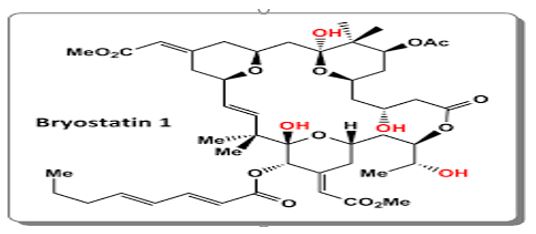
Bryostatin 1 is a natural product derived from the marine invertebrate Bugula neritina. It has potent and broad antitumor activity. Bryostatin 1 activates protein kinase C family members, with nanomolar potency for PKC1α and ε isotypes.

In the central nervous system, bryostatin 1 activation of PKC boosts synthesis and secretion of the neurotrophic factor BDNF, a synaptic growth factor linked to learning and memory. The compound also activates nonamyloidogenic, α-secretase processing of amyloid precursor protein.

Preclinical work on bryostatin in nervous system diseases has mainly come from the Alkon lab. In their studies, intraperitoneal administration activated brain PKCε and prevented synaptic loss, Aβ accumulation, and memory decline in Alzheimer’s disease transgenic mice. he drugs preserved synapses and improved memory in aged rats, and in rodent models of stroke and Fragile X syndrome. In a different lab, bryostatin given by mouth improved memory and learning in an AD model. In a mouse model of multiple sclerosis, bryostatin promoted anti-inflammatory immune responses and improved neurologic deficits.
MACROALGAE

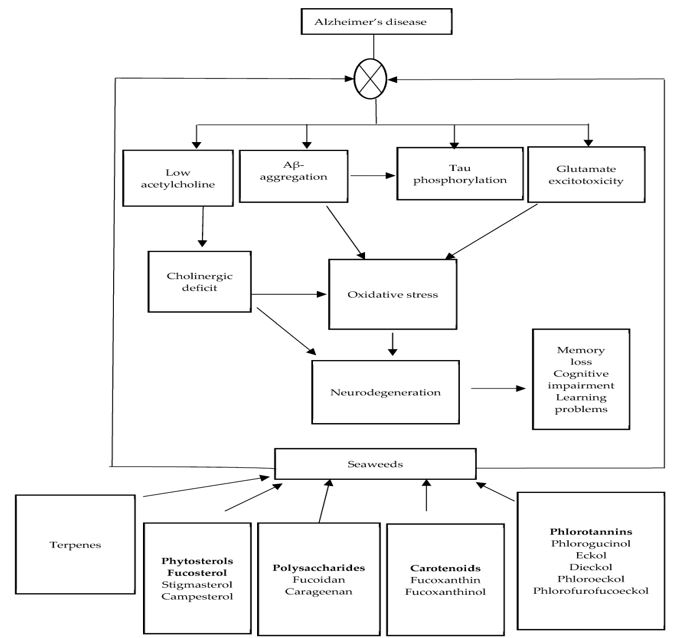
Acetylcholinesterase (AChE) and butyrylcholinesterase (BChE) are important enzymes involved in the regulation of acetylcholine (ACh) in the cleft of neurons to promote cognitive function. However, loss or rapid degradation of acetylcholine leads to cholinergic dysfunction and synaptic ultimately memory impairment. Hence, cholinesterases have been developed to alleviate cholinergic deficit by restoring ACh levels and improving cognitive function Seaweed-derived biologically active compounds have been reported to exhibit inhibitory effects on enzymes associated with Alzheimer’s disease. revealed that aqueous-ethanol extracts rich in phlorotannins, phenolic acids, and flavonoids from Ecklonia maxima, Gelidium pristoides, Gracilaria gracilis, and Ulva lactuca exhibit acetylcholinesterase and butyrylcholinesterase inhibitory activities. Furthermore, sulfated polysaccharides obtained from Ulva rigida as well as the aforementioned algal species also showed potent inhibitory effects on BChE and AChE in vitro. Purified fractions of Gelidiella acerosa showed AChE and BChE inhibitory activity. Phytol was identified in the fraction as the most effective constituent. In the same study, molecular docking analysis revealed that phytol tightly binds to the arginine residue at the active site of the enzyme, thereby changing its conformation and exerting its inhibitory effect. AChE inhibitory activity of Codium duthieae, Amphiroa beauvoisii, Gelidium foliaceum, Laurencia complanata, and Rhodomelopsis africana. Hypnea musciformis and Ochtodes secundiramea extracts showed weak inhibitory activity (less than 30% inhibition) on AChE. Jung et al. also reported AChE and BChE inhibitory effects of methanol extracts of Ecklonia cava, Ecklonia kurome, and Myelophycus simplex. Glycoprotein isolated from Undaria pinnatifida showed dose responsive inhibitory effects on butyrylcholinesterase and acetylcholinesterase activities.
MEDITERRANEAN RED SEAWEED HALOPITHYS INCURVA

The close relationship between the amyloid aggregation process and the onset of amyloidosis constantly encourages scientific research in the identification of new natural compounds capable of suppressing the formation of toxic amyloid aggregates. For the first time, our findings demonstrated the in vitro anti-amyloidogenic role of the H. incurva, whose metabolic composition and bioactivity were strongly influenced by seasonality. This work focused on the bioactivity of H. incurva phytocomplex to evaluate the synergistic action of its various constituents, while the structure and functionality of its secondary metabolites will be the subject of further studies.

FASCAPLYSIN

Fascaplysin, a bis-indole alkaloid, was isolated from a marine sponge Fascaplysinopsis Bergquist sp. Fascaplysin is a specifc kinase inhibitor for CDK 4.

More information regarding this Article visit: OAJBGSR


https://biogenericpublishers.com/pdf/JBGSR.MS.ID.00253.pdf
https://biogenericpublishers.com/jbgsr-ms-id-00253-text/

Friday, 24 July 2020

Application of Crispr-Cas 9 in Food and Agriculture Science: A Narrative Review by Paroma Arefin in Open Access Journal of Biogeneric Science and Research


Abstract

Genetic diversity is the foundation for introducing plant development programs. Scientists and breeders used various methods, ranging from modern crossing to classical biotechnologies, to address the restricted incidence of natural mutations. Incomplete gene disruption or spontaneous injection of transgenes into plant genomes also occurs in earlier generations of knockout and gain-offunction technologies. Recent advances in genetic engineering has brought numerous benefits to the food and agriculture sector by improving the essential features of agricultural features. The CRISPR / Cas9 technology emerges from a bacterial immune system of type II and represents a new age of selective genome editing technology that can be spread to almost all species. In this paper, we have focused on advancements in the utilization of the CRISPR-Cas9 system in the food and agricultural industry, particularly in the development of resistant crops with improved quality and productivity.

Keywords: CRISPR / Cas9 technology; Application in food and agriculture; Gene editing; Crop improvement; Future perspectives.
Introduction

Over one billion people in today's world are suffering from chronic malnutrition, while our agricultural production are declining at the same time, compounded by the loss of biodiversity and the growing challenges of climate change. With the global population expected to reach 9 billion by 2050, contemporary agriculture will face huge challenges, requiring higher yields and improved quality crops, and requiring less inputs [1-3]. While conventional breeding is presently the most commonly used approach to plant improvement, it is labor intensive and typically takes many years to advance from the initial stages of sampling phenotypes and genotypes to the first crosses into industrial varieties.

The food industry has a 2050 time limit for developing and expanding the food supply chain in order to support the growing population in the world. Progress is required for this reason through crops, livestock and microbes [4,5]. Researchers have been trying to take the steps needed to achieve this milestone since 2005, but efforts have failed. The food production sector is now in a position to make some of its most exciting developments since the Green Revolution with the advent of CRISPRs and CRISPR (Cas) proteins [4,6].

To know more about this article click on 
For guidelines https://biogenericpublishers.com/author-guidelines/

For Online Submissions Click on https://biogenericpublishers.com/submit-manuscript/


Thursday, 25 June 2020

An Extensive Review of Health and Economy of Bangladesh Amid Covid-19 Pandemic by Abdul Kader Mohiuddin in Open Access Journal of Biogeneric Science and Research

Abstract
COVID-19 has affected 212 countries around the world, killing more than 287,000 and infecting more than 4.2 million by May 12, 2020. Bangladesh, a South Asian low-middle-income economy, has experienced a demographic and epidemiological transition with rapid urbanization and a gradual increase in life expectancy. It is the seventh most populous country in the world and population of the country is expected to be nearly double by 2050. The increasing burden of communicable diseases in Bangladesh can be attributable to rapid urbanization and nearly 50% of all slum dwellers of the country live in Dhaka division. In 2017, National Rapid Response Team of IEDCR investigated 26 incidents of disease outbreak. The joint survey of the Power and Participation Research Centre and BRAC Institute of Governance and Development reveals that per capita daily income of urban slum and rural poor drops by 80% due to present countrywide shutdown enforced by the government to halt the spread of Covid-19. 40%-50% of these population took loans to meet the daily expenses. However, the country has just 127,000 hospital beds, 91,000 of them in government-run hospitals.

Keywords: Covid-19 Lockdown; Shortage of PPEs; Global Pandemic Crisis; Incentives for Officials at Risk

Abbreviations: IEDCR: Institute of Epidemiology, Disease Control and Research; BRAC: Bangladesh Rural Advancement Committee
Introduction

Notwithstanding the depressing state of major indicators such as negative export-import growth [1-4]; significant revenue drop [5-8]; shrinking private sector investment [9-12]; rising un-performing loans documented in 2019 [13-16]. Bangladesh’s government was optimistic that somehow the depressing trend of these indicators might be reversed. But this optimism has now been seriously dented with the severe onslaught of Covid-19. The decline in national and global demand for manufactured goods, particularly in the garment sector, risks creating unemployment and deepen poverty. The urban poor will be hardest hit while the number of additional poor will be higher in rural areas. The IEDCR was Bangladesh’s only Institute with testing facilities for COVID-19 until March 26, when a second facility was granted testing rights. Centralized testing has not yet been able to respond effectively to the wave of suspected COVID-19 patients in these under-resourced public institutions. Amidst this global crisis, Bangladesh has been identified as one of the 25 most vulnerable countries to be affected by the fast-spreading virus [17,18]. By 25. 04. 2020, it was confirmed in 63 out of 64 districts (Figure 1) [19].

 The combined capacity of 19 corona testing laboratories is around 5,000 samples per day, but in the last few days, authorities have conducted only 2,100 tests. Unwillingness of the authorities concerned and bureaucratic complexities have indicated that the availability of a kit delays the detection of the novel coronavirus infection. Moreover, the government in Bangladesh has not so far sought to proactively limit transmission from primary cases to community.


Wednesday, 17 June 2020

Indian Temperature Scenario: “No Global Warming Trend”_Biogeneric Publishers


Abstract
Indian climate is highly variable in space and time. Temperature is a part of it. It is influenced by several localized and regionalized factors such as oceans/seas on three sides (South, East & West), mighty Himalayan Mountain Ranges in the North; other hill ranges such as Western Ghats, Water Resources, etc. They as such don’t contribute to trend in temperature. Some of these are changed by mankind to meet their needs & greed under increasing population. Human induced changes in terms of land use and land cover do contribute to trend in temperature but they are mostly localized or at the most regionalized changes only. These are clearly reflected in Indian temperatures. Several groups studied Indian temperatures using seasonal, annual & decadal of maximum, minimum & mean at station, state & country levels. One such study claims there is 1.2 oC/100 years increase in Indian annual average temperature; another major study showed the trends varying from < 0.0 to around 1.5 oC over different parts in India. In India on the northwest the Thar Desert and on the northeast humid zone form the major heat wave and the cold wave zones. South-central zones present dry areas with higher temperature regime. Scientific groups are not interested to talk on the local-regional-national level variations in the temperature that affect agriculture. Truly speaking there is no global warming as such in Indian temperature. One must remember the fact that the location data is affected by several localized factors. Thus local and regional and thus national averages give contradicting inferences.

Keywords: Global warming; climate change; heat & cold waves; heat & cold islands; climate system & general circulation patterns

Introduction
There has been a high-pitch “hue and cry” around the world on the so-called “global warming and its impacts”. This propaganda has been directly or indirectly affecting the national economies, agriculture and irrigation; and thus knowingly and unknowingly that has been affecting people below the poverty line around the world. Globally several agencies have been taking part in this mischievous propaganda in which some are showing graphs by manipulating historical temperature data series and some others doing the propaganda by spending huge sums. On both sides’ business houses, NGOs, Multinational Companies, International Agencies like UN Organizations, World Bank, IMF, etc. have been involved with vested interests. This is clearly reflected in USA President’s cancellation of funds to WHO a UN body. Politicians around the world became pawns in this game. They are not interested to talk on the local-regional-national level variations in climate that includes temperature that affect agriculture.


In this process, at COP-21 the target was fixed for global warming as 1.5 to 2.0 oC; and fixed for green fund as $100 billion per year for five years – COP-25 in Madrid in December 2019 failed in reaching an agreement to share the meagre collections and posted for COP-26 to be held in Glasgow in Scotland on 9-18th November 2020, which is now postponed to 2021 with Covid-19. With the USA government’s withdrawal from this group the funds flow has come down drastically; and thus pro-global warming groups started attacking Trump and his government left and right but Trump hasn’t changed his opinion/policy even an inch. At this stage those pro-global warming groups brought in a well-trained young Swedish Girl. To counter her, a German teenage girl was roped in. The Swedish girl has been making loud statements including attacking Trump, the US President and getting awards/rewards with no or little knowledge on the science of climate and the science of climate change, at least what the IPCC or UNFCCC or WMO said in their respective reports. For her it is global warming and carbon credits. Here she invariably uses the word “climate change” as de-facto “global warming”, as she is shy of using the word global warming. Sometimes the global warming groups using “human caused or induced climate change”. However, according to IPCC’s AR5 all that caused by humans is not global warming. Therefore, we must demand those pro-global warming groups, use the word “global warming” and not “climate change” as climate change is a vast subject and climate covers several meteorological parameters.

To know more about this article click on 

Wednesday, 10 June 2020

A Study on Assessments of the Variants of Mulberry Silkworm (Bombyx Mori L.)Breeds ‘Nistari’ using Biochemical & Molecular Markers_Open Access Journal of Biogeneric Science and Research


Abstract

Nistari, is an indigenous poly voltine breed of mulberry silkworm (B.mori L.). Though Nistari is not a highly productive, but gene(s) imparting to thermo-tolerance and resistant many pathogens are conserved in this poly voltine silkworm breed. Among poly voltine silkworm breeds, Nistari is the oldest breed that is being reared in India. Sericulture in eastern India is highly dependent on ‘Nistari’ as the breed can survive extreme climatic variations and disease-resistant properties. In fact, in the high temperature and humidity conditions of West Bengal, the Nistari breed is used as one of the components of hybrids (Multi x Multi and Multi x Bi) commercially reared during five seasons February, April, June, September, and November. On the basis of acclimatization in different regions of eastern India, different variants (=strains) of Nistari are available in West Bengal. Depending upon the locality/area of availability, such variants are known as Nistari-Batepur, Nistari-Chalsa, Nistari-Shivnivas, and Nistari-Debra. Moreover, some other strains like Nistari-Plain, Nistari-Marked, Nistari-White and Nistari-Sex-limited variants are quite frequent in different areas of West Bengal. These variant names are on the basis of larval and cocoon characteristics. All these mentioned Nistari strains exhibit phenotypic variations like cocoon weight, shell weight and markings on larval surface. With this background following study is proposed to study variation among strains of Nistari at biochemical (using enzymatic and non-enzymatic cellular components, molecular level (using microsatellite markers)) and repairing of DNA damage ability and along with the differences in yield traits of Nistari variants available in Institute’s repository.

 Keywords: Sericulture; Nistari; DNA; Molecular markers; Coccon

Abbreviations: ROS - Reactive Oxygen Species; CAT - Catalase Activity; SOD - Superoxide Dismutase Specific Activity; TSS - Total Soluble Sugar Content; LPO - Lipid Peroxidation as a Function of Malonaldehyde Oxidation; APOX - Ascorbate Peroxidase Activity; H2O2 - Hydrogen Peroxide Titre
Introduction

Sericulture of eastern region is highly dependent on Nistari as it is the hardy polyvoltine breed which can survive extreme climatic conditions of this region. Nistari is used for producing cocoon on commercial scale in West Bengal and other states of eastern India. On the basis of acclimatization in different region of eastern India it has been called by area names such as Nistari-Batepur, Nistari-Chalsa, Nistari-Shivnivas and Nistari-Debra. Moreover there are other strains too named as Nistari-Plain, Nistari-Marked, Nistari-White and Nistari-Sex-limited [1]. All strains of Nistari reportedly conserved genes imparting thermo tolerance and disease resistant though the breed is not productive 2. Some strains of Nistari show better fecundity, larval and cocoon characters 3.Sericulture in Eastern India demands region and season specific breeds due to its fluctuating climatic conditions 4.Nistari plain reportedly having better survival and cocoon yield; while Nistari marked has high shell weight and shell ratio.

Chalsa and Debra have better performance over plain and marked strains of Nistari. Nistari Debra+P which is derived from the crossing of Nistari Plain and marked, has enhanced fecundity and yield parameters 3. Studies suggest that phenotypic variability among Nistari strains is due to environmental variability rather than genetic variability. But inadequate information is available on the reason of variation among Nistari strains found in Eastern India. To study the genetic variability among various available strains of Nistari molecular markers can be used. Reactive oxygen species (ROS) are produced by cellular metabolism and by exogenous agents in the cells. ROS include a number of chemical reactive molecules derived from oxygen, such as super-oxide anions, singlet oxygen, hydrogen-peroxide and hydroxyl radicals. Over production of ROS can cause oxidative damage of various bio-molecules, especially lipids and proteins. The lipid per oxidation induced cellular leakage due to free radicals is one of the major reasons of cell death .The DNA is also the major target of direct and/or indirect action of generated ROSs. The harmful effect of the free radicals can however, be blocked by antioxidant substances. Like many insects, during biotic and a biotic challenges imbalance between oxidant generation and antioxidant defese occurs in silkworm. Reactive oxygen species (ROS) and associated anti-oxidative enzyme system plays an important role in biotic /abiotic stress resistance in various insects. Various stress inducted ROS usually reacts with proteins, lipids and DNA, causing oxidative damage and impairing the normal functions of cells 4.Many researchers correlated some of the reactive oxygen species (ROS) associated enzymes like superoxide dismutase (ROS), ascorbate per oxidase (APOX), catalyse (CAT) and non-enzymatic component like H2O2 generations and lipid per oxidation. Besides, stress induced DNA damage is also considered as a major event during a biotic stresses. Though some strains of Nistari showed varying degree of biotic and stress tolerances, but information is lacking on the comparative analysis of these major anti oxidative groups among the available strains of Nistari. The relationship with radical scavenging potentials and oxidative stress induced DNA damage repair abilities of the available Nistari resources are also not known.
Objectives of Study

a. Assessment of variability of available ‘Nistari’ variants using ROS stabilizing enzymatic and non-enzymatic components of mulberry silkworm

b. Evaluation of stress induced DNA damage repairing ability of ‘Nistari’ variants

c. Assessment of genetic variability of ‘Nistari’ variants using Microsatellite markers.
Materials and Methods

Six strains (=variants) of poly voltine silkworm (Bombyxmori L.) breed Nistari were selected for the study. These six [Nistari strains- plain, marked, chalsa, Debra, white and Sex-limited Y (YSL)] strains were reared under recommended temperature and humidity. While, for different biochemical assessments, haemolymph of fifth instar (4th day) larvae was collected by pricking the 1st abdominal proleg of each larva using 1.5mL of sterile microfuge tube contacting 5-10mg of phenylthiourea. Subsequently, haemocytes were separated from haemolymph by centrifugation at 5000rpm for 10min at 4 °C and haemolymph plasma was stored at -35 °C for further use.
Results and Discussion

1.1.             Assessment of Variability of Available ‘Nistari’ Variants Using ROS Associated Non-Enzymatic and Enzymatic and Components

Six strains of Nistari namely Plain, Marked, Chalsa, Debra+P, White and Y-Sex-limited are maintained in institute’s repository which were reared twice during January-February 2018 and April-May 2018 following standardized protocol. Haemolymph was collected from 5th instar larvae and store at -35 °C in 0.5mL aliquots for estimation / assessment of different parameters.

Nistari variants (=strain) originated from B.mori L. varied significantly for the haemolymph contents of H2O2, lipid peroxidation (LPO) and total soluble protein (TSS) as well as the activities of ascorbate peroxidase (APOX), catalase (CAT) and superoxide dismutase (SOD; Table 1). Variations of antioxidative enzyme activities in the tested strains of Nistari were generally much higher than the anti-oxidative non-enzymatic components and TSS. Among the enzymes, variation of APOX activity was maximum (5.4 fold), followed by CAT (3.5 fold); while SOD was the least variable (1.6 fold).Among the tested non-enzymatic components, variation of LPO was maximum (3.3fold).

https://biogenericpublishers.com/

To know more about this article click on 


Friday, 22 May 2020

Open Access Journal of Biogeneric Science and Research_Subject Areas

Life Sciences:

Agricultural, Biological Sciences, Biotechnology, Biochemistry, Genetics, Molecular Biology, Environmental Science, Ecology, Arachnology, Biodiversity and Conservation, Entomology, Limnology, Ichthyology, Malacology, Immunology and Microbiology, Neuroscience, Marine Biology.

Biological Sciences:

Biochemistry, Biotechnology, Genetics, Microbiology, Molecular Biology, Immunology, Biostatistics, Botany, Zoology, Cytology, Poultry Science, Fishery Science, Marine Biology, Wildlife Biology, Cell Biology, Environmental Sciences, Ecology & Environmental Biology, Veterinary Science

Medical & Health Sciences:

General Medicine, Nursing and Health Care, Public health & hygiene, Tropical diseases, Endocrinology, Anatomy, Neurology, Dermatology, Orthopedics, Organ transplantation, Oncology, Pathology, Haematology, Nephrology, Gynecology, Ophthalmology, Pediatrics, Radiology, Medical Biotechnology, Gerontology, Diabetes, Pulmonary, Genetics, Vaccines, Anesthesia, Radiology, Surgical

Pharmaceutical Sciences:

Pharmaceutics, Pharmacology, Pharmacognosy & Phytochemistry, Pharmaceutical Chemistry, Pharmaceutical Biotechnology, Pharmacy practice, Pharmacogenomics, Medicinal Chemistry, Molecular Pharmacology, Novel drug delivery system, Nanotechnology, Analytical Chemistry, Organic Chemistry, Natural Chemistry, Polymer Sciences, Clinical Pharmacy, Chemical Engineering, Chemistry, Material Science

Engineering Sciences:

Civil, Robotic, Mechanical, Computer Science, Electronics, Electrical, Information Technology, Automobile, Aeronautical, Instrumentation, Bio Engineering, Chemical Engineering

https://biogenericpublishers.com/subject-areas/
To Know more
 Open access Journal Click on Biogeneric publishers

https://biogenericpublishers.com


Wednesday, 20 May 2020

Prevalence of Blastocystis hominis in Patients with Gastrointestinal Trouble_Biogeneric Publishers

Prevalence of Blastocystis hominis in Patients with Gastrointestinal Trouble by Khadiga A Ismail


Cross section study was conducted during the period From January till December 2019 on 100 patients attending King Faisal Medical Complex in Taif, presented with symptoms of gastrointestinal trouble (i.e., nausea, vomiting, loss of appetite, passage of loose stool, passage of mucoid stool, and abdominal pain). Patients had recently received anti-parasitic medications were excluded from this study.

Blood pressure measuring device, computer tomography devices, MR devices, PET / CT, x-ray devices, cardiograph devices, dialysis machines, steam autoclaves, sterilizers, artificial organs, artificial tissue, artificial blood, blood analysis devices, respiratory function device, mammography, ECG devices, various pumps, heat exchangers (heat exchangers), ultrasound devices, manometers, stethoscope surgical instruments, orthopedic implants, dental implants, chemical extraction for drug production, supercritical extraction, injectors, flow meters, refrigerators, medical refrigerators, freezers, operating table, operating room lighting and equipment, medical gas installation, operating room - hospital ventilation, patient room heating-ventilation-air conditioning devices, passive cooling systems (especially for tomography, MR devices etc.), injectors, catheter, weighing, scale, heater, patient beds, stretcher, band aj, tourniquet, anesthesia devices, ventilators, respirators, baby incubators, pacemaker systems, micropipettes, bedside monitors, radio frequency devices, serum bags-bottles, extractors, burettes, beakers, precision scales, electric mobile surgical aspirators, electrical safety test, endoscopy devices and systems, medical device calibration, quality management system applications for the health system, heart - lung pumps, infusion and perfusion pumps, vacuum meters, surgical robots and robotic surgical systems, nanoroboots, angio devices, stent manufacturing, tissue engineering products, biosensors, bone densitometers, dental and jaw x-ray and dentistry devices, electronically adjustable patient chair etc., serum pumps, hot-cold compresses, patient body heaters and coolers, lead gowns, life support units, emergency aid and ambulance vehicles and their internal Names, blood glucose meters, photodynamic therapy devices, physiotherapy devices, prosthetic leg - arm, tissue engineering applications, stem cells, implant batteries, optical imaging devices, optical diagnosis and treatment devices, devices used in eye diseases and treatment, microscope etc., acoustic diagnosis and treatment devices, image-supported therapy devices, neuro-optical stimulation devices, laboratory automation, rehabilitation robots, wheelchairs, digital modeling, virtual reality systems, wireless monitoring systems, mobile phone-network-based devices, computer-equipped devices and medical IT systems, nan-technological devices, are the examples of devices and machines frequently used in the diagnosis and treatment of patients within the scope of health services. There are also a variety of thermodynamic systems used in the fields of machinery, chemical and energy engineering, and various medical techniques used to obtain the active substances of drugs through various plants. In addition, the realization of medical technique applications is one of the most important main factors expected from the productive engineer of our age.  

https://biogenericpublishers.com/pdf/JBGSR-RA-04-2020.pdf
https://biogenericpublishers.com/jbgsr-ra-04-2020-text/

To Know more Open access publishers Click on Biogeneric publishers
https://biogenericpublishers.com/


Wednesday, 6 May 2020

Antigen and antibody for Coronavirus RNA Vaccination Development


Coronavirus and its strains are associated to the subfamily of Orthocoronavirinae. It is associated with the family of Coronaviridae and order of Nidovirales and realm in Ribavirin. These are enveloped viruses with positive single stranded RNA genome and nucleocapsid of helical symmetry. The size of genome for coronaviruses varies from 27 to 34 kilobases.

Mutation of Coronavirus may or may not be recognized by the immune system on subsequent infection; and once it highjacks host of the cell, replication of virus becomes faster. As a result immune system will be unable to recognize the strains of these infections; infections caused by coronavirus like Middle East Respiratory Syndrome (MERS) and Severe Acute Respiratory Syndrome (SARS) have inclined to be very severe and can cause significant mortality. In this paper discusses about antigen and antibody for development of vaccines for coronavirus and its strains so that some of the B cells become memory B cells which recognizes future exposure to the disease.

Coronavirus was discovered in the year 1960’s. It infected in chicken and two human patients with common cold. There are family of corona virus which is as lethal as Severe Acute Respiratory Syndrome (SARS). Most of these involves respiratory tract infections [1]. There are many human coronaviruses to exist. Few them are human coronavirus 229E (HCoV-229E), HCoV-OC43 which is related coronavirus (SARA-Cov). The genome structure of coronavirus has unique features that includes N-terminal fragment within spike protein [2]. A new strain of corona virus which was discovered in December 2019 named as COVID 19.

https://biogenericpublishers.com/pdf/JBGSR-RW-01-2020.pdf
https://biogenericpublishers.com/jbgsr-rw-01-2020-text/


To Know more Open access publishers Click on Biogeneric publishers
https://biogenericpublishers.com/

Friday, 1 May 2020

e-Books_ Open Access Journal of Biogeneric Science and Research

E-Books offer numerous potential advantages, to get to when and where you need to peruse. It's an incredible method to exhibit information in an imaginative manner and is significantly more outwardly engaging than a white paper. The E-Book has become the ebb and flow standard structure to have the examination work accessible to the clients. Our Open Access Journal of Biogeneric Publishers offers high caliber of PDF designs for our researchers to have their work accessible to the world.

Helping quick query of the necessary data would now be able to discover through digital books as, it's the hand library accessible of the clients upon one catch. We convey excellent e-print that is perceptible on any screen. E-Books are where each individual can bear, as they are unreservedly accessible with Open Access Journal of Biogeneric Publishers. E-Books are installed with an assortment of multi-media components which are not accessible with customary books. Additionally, sound and video can be embedded to make perusing agreeable while getting to the distributed articles.

Biogeneric e-Book readers enjoy:
 
Well known books of Professionals: can peruse books of included educators from overall colleges.
Boundless Downloads: No limitations for digital book downloads, perusers can download once and can flow the PDF. No expense: As this is an open access production no expense is charged for perusers and can be kept in the electronic gadgets like Mobile telephones, PCs once in the wake of downloading and can utilized whenever without web.